A Fresh Wind in the Fire Brigade, and a Snapped Achilles Tendon
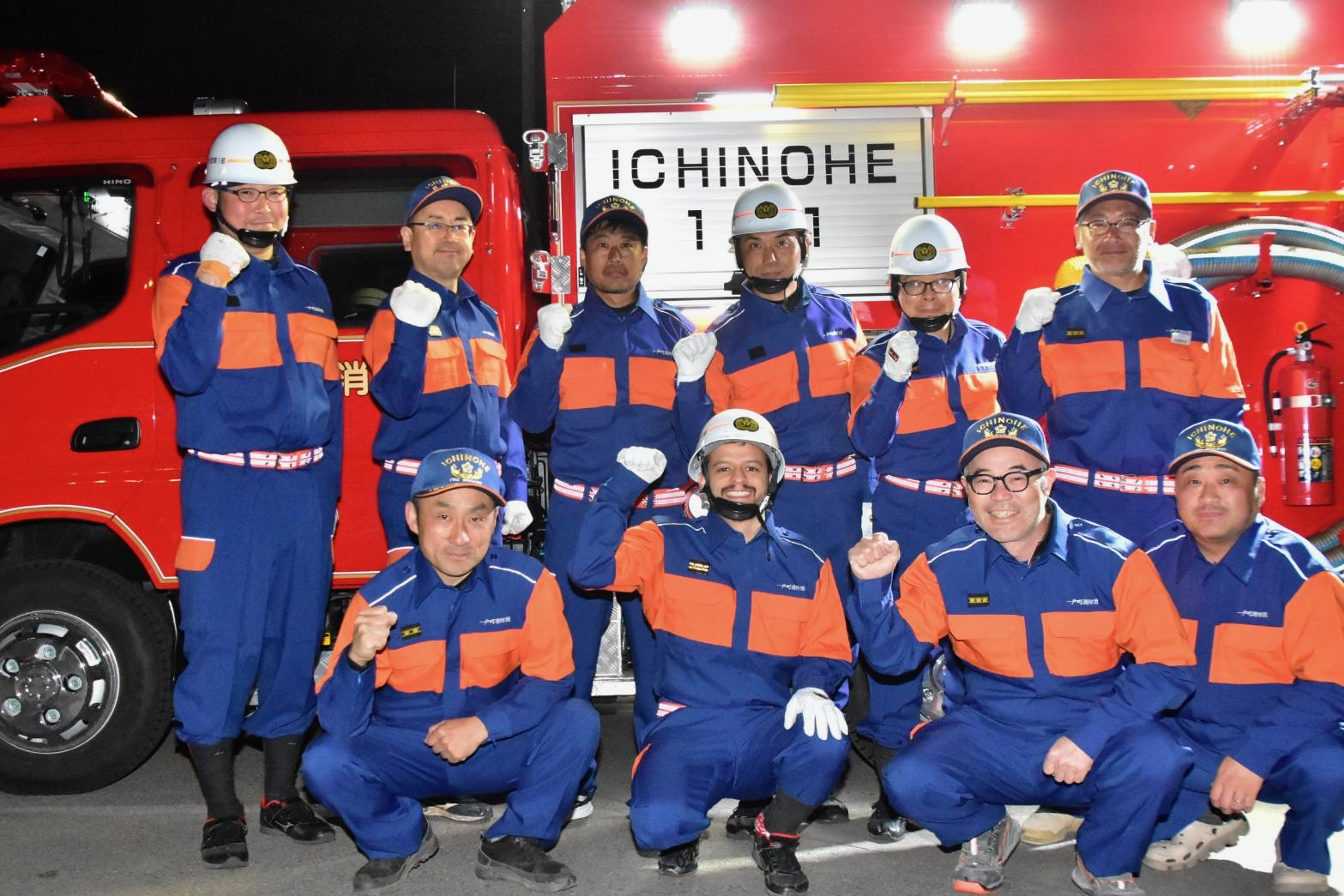
Here is a photo of me standing in front of a red fire engine, fist raised, with the word ICHINOHE 1-1 glowing in the dark behind us. What the photo doesn't show is that a couple of weeks later I would be lying in a hospital bed in Hachinohe with a freshly repaired Achilles tendon, staring at the ceiling and wondering how a quiet night of indoor football had ended my summer before it even started. This is the story of both things at once: how I became the first foreign member of the Ichinohe volunteer fire brigade, and how a single loud "pop" changed my summer. It is also, I hope, a little window into a part of rural Japan that most visitors never see.
First, let me explain what a "shōbōdan" is
If you have never lived in rural Japan, the word shōbōdan (消防団) is probably new. It is usually translated as "volunteer fire brigade," but that doesn't quite capture it. A shōbōdan is not made up of professional firefighters. It is made up of ordinary residents like farmers, office workers, shop owners, and town hall staff who keep their normal jobs and, on top of that, train and stand ready to protect their community. They are different from the professional fire department (the shōbōsho, with full-time firefighters). The volunteers respond to fires and natural disasters, help with evacuation and search, and in calmer times, they handle fire-prevention campaigns, neighborhood patrols, equipment checks, and even help out at local festivals. In a small town like Ichinohe, the shōbōdan is part of the glue that holds the place together. There is also a quieter reality behind all of this: across Japan, the number of volunteer firefighters has been falling for years. Rural towns are aging and shrinking, young people move to the cities, and fewer hands are left to carry the hoses. So, taking all of that into account, I really feel it's a privilege for a foreigner like me to be part of the team.
How I ended up in uniform
I didn't join the fire brigade through some grand plan; it started simply by showing up and helping. Last year, I helped build the festival floats (the dashi) for the autumn matsuri, like arranging flowers, learning rhythms, carrying things, being an extra pair of hands wherever I could, while taking in everything that was going on. Through that, I got to know the people of my neighborhood, and one thing led to another. After the festival, I was invited to join the shōbōdan, and I said yes. (At first, I wasn't even sure I'd be allowed to join, since I'd never heard of another foreigner doing it, haha.) Since then, I have been showing up, training, and slowly learning the culture of the shōbōdan, doing some patrolling and practicing my Japanese along the way. My unit is the First Division, First Unit — the "1-1" you can see written on our truck. It is a small, tight group, and they welcomed me with patience and warmth I will not forget.
Spring season, nightly practice, and the newspaper
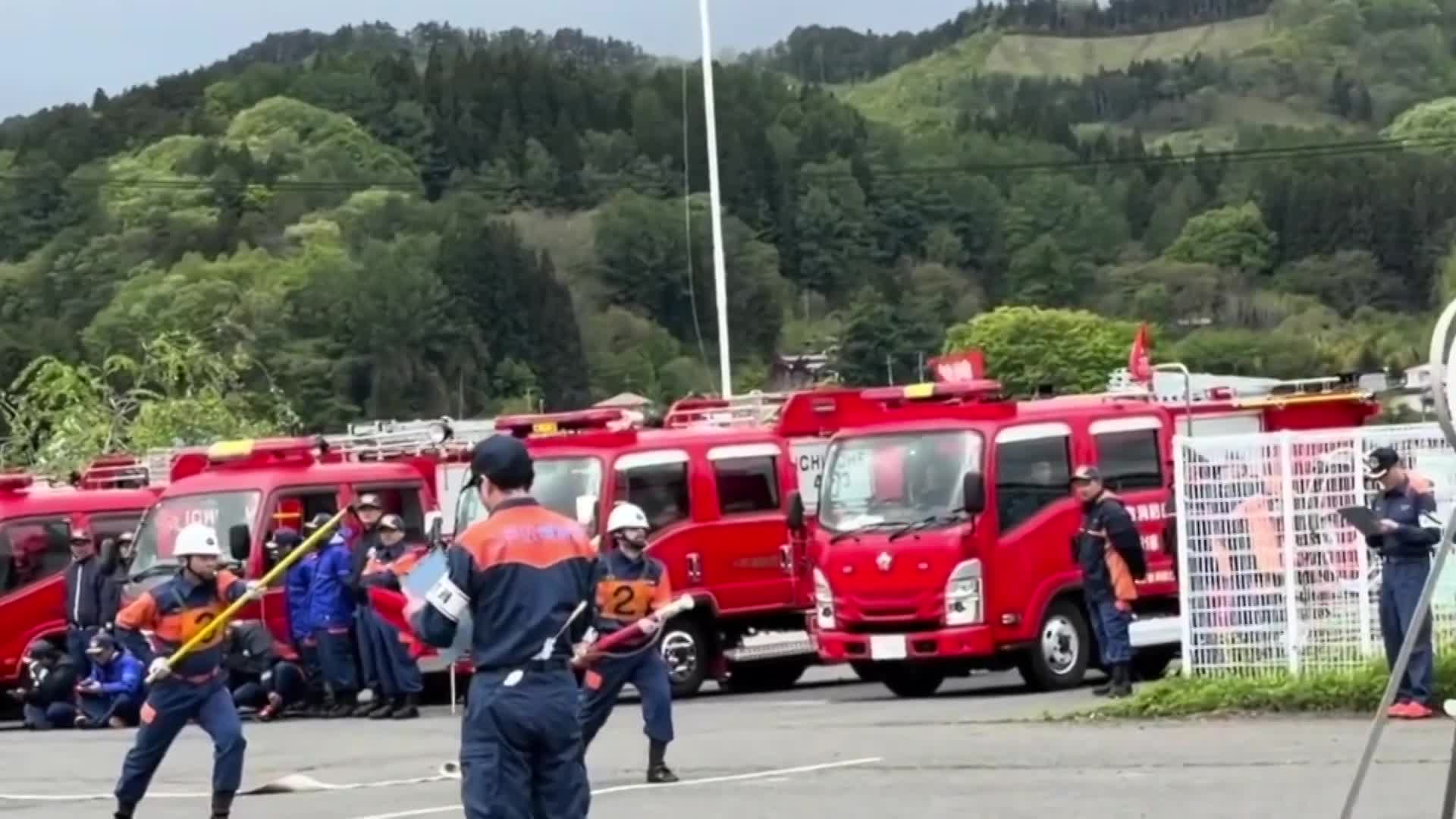
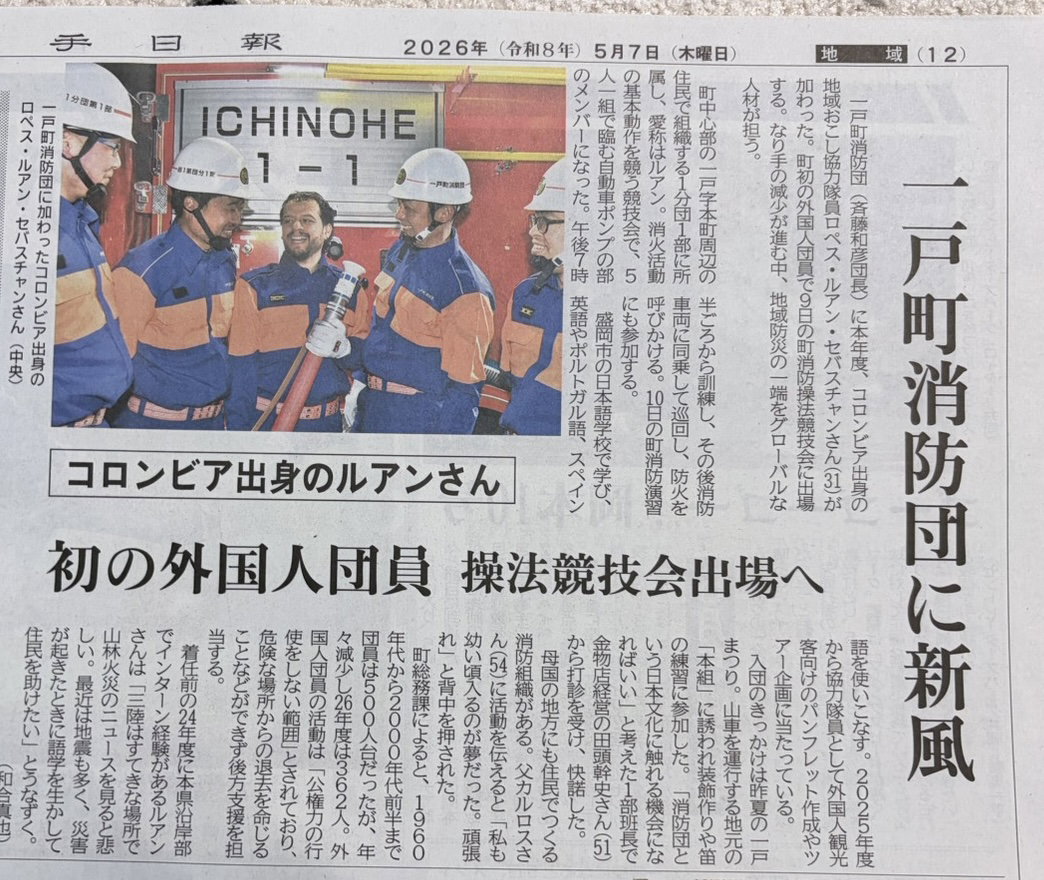
Spring in Japan is fire-prevention season, and for a shōbōdan that means two big things: the spring drill (what a lot of people casually call the "shōbō matsuri") and the sōhō kyōgikai — the firefighting drill competition. The sōhō competition is hard to explain until you have seen it. Basically, all the teams from the town compete on standardized firefighting movements: deploying hoses, operating the pump, and hitting the target. All judged on speed, accuracy, and disciplined, almost choreographed form. Every step has a correct way to be done, down to where your feet land and how you hold your posture. To get it right, you practice. A lot. We were out there almost every single night with the team, repeating the same movements until they became muscle memory. It was during this stretch that the Iwate Nippo (岩手日報), the region's main newspaper, ran a feature on our team. The headline talked about "a fresh wind in the Ichinohe fire brigade," and the article was about me joining as the brigade's first foreign member, heading into the competition. I won't lie, seeing myself in the local paper, in uniform, next to my teammates, was surreal and moving. I came here as an outsider, and there I was, printed in the regional paper as part of the team. Some old friends from Morioka even reached out to celebrate it!
Being the "sensei": the message I gave
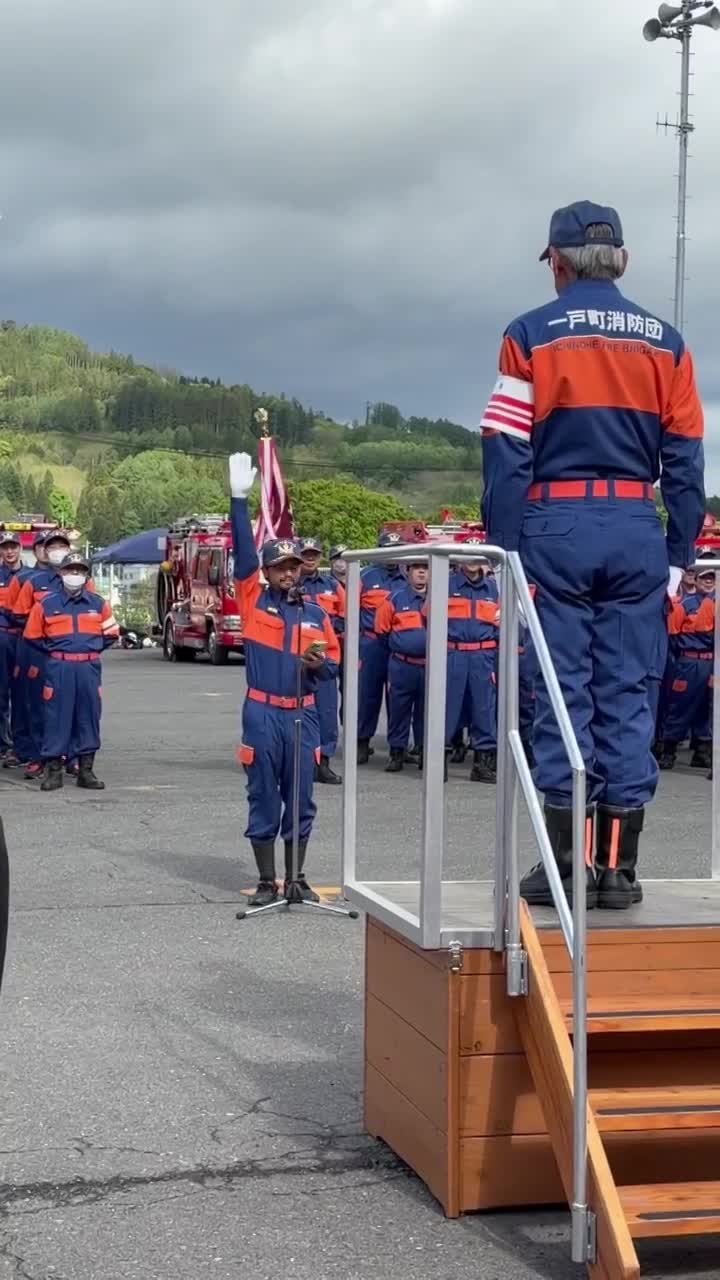
At this year's event, I was also asked to stand up as a kind of representative and give a message to the group. I was nervous, but I spoke from the heart, in Japanese, with a little Spanish at the end. A lot of people told me afterward that it moved them. Here is what I said: "I believe the difference between humans and animals is the ability to think. And the difference between humans and AI is the ability to act on our own. That is why I want to be a person who thinks carefully, and then acts." "The reason I joined the fire brigade is simple: I wanted to actually move, with my own hands, for this community. I am not Japanese. But I love Japan. And precisely because of that, I want to do everything I can to become a force that protects this region and this country." "Everyone, thank you for talking with me, for having fun with me, and for drinking with me!" "And finally, in Spanish: 'Camarón que se duerme se lo lleva la corriente' ¡Vamos con toda!" (The shrimp that falls asleep gets swept away by the current. Let's all give it everything we've got! )May 9, Reiwa 8 (2026). López Luan Sebastián, member of the First Division, First Unit, Ichinohe Town Volunteer Fire Brigade.
The competition — and then, the "pop"
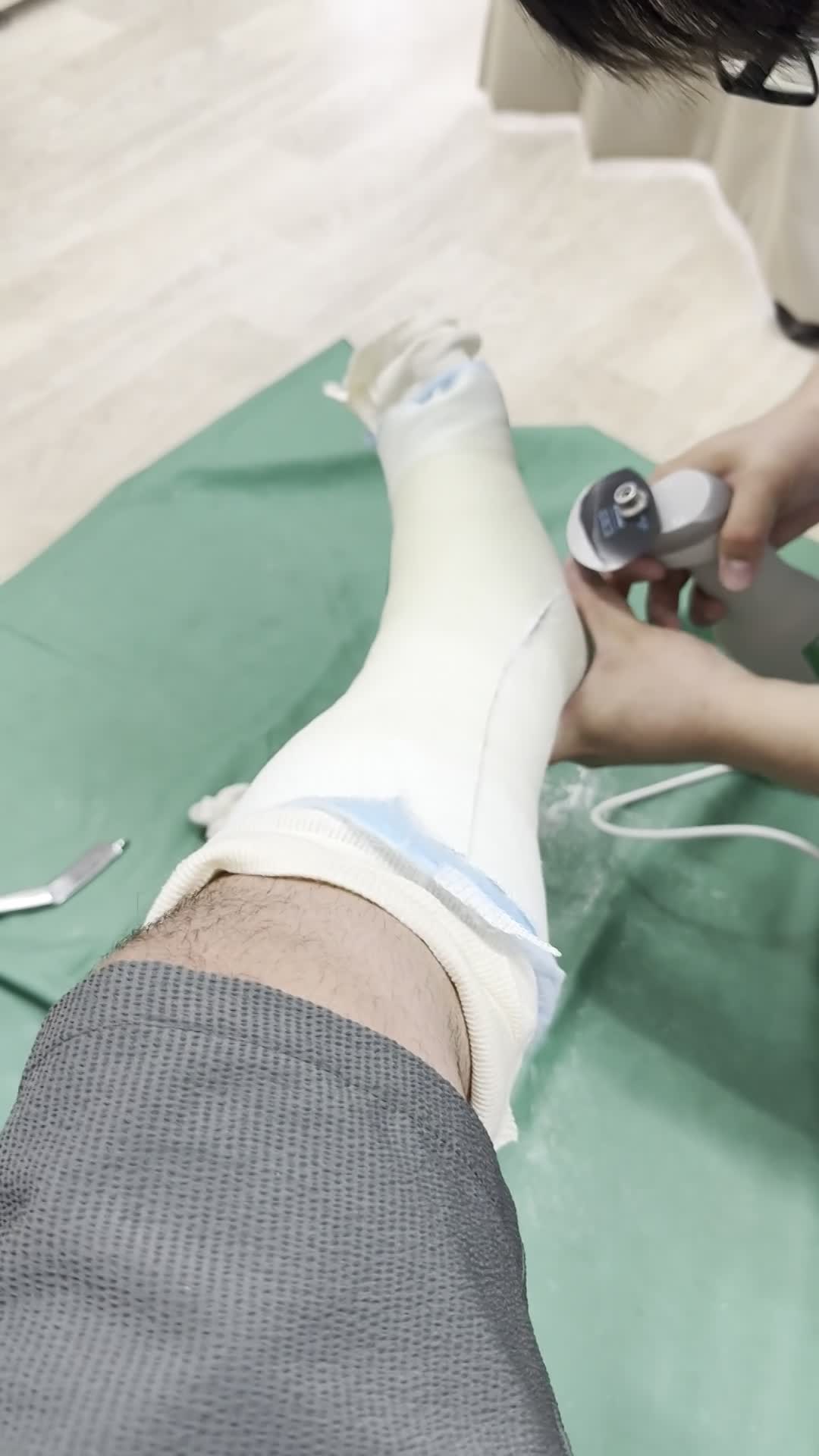
After the opening ceremony, everyone competed. We didn't win, but honestly, we gave it everything we had, and since it was my first time even watching the event, it was a lot of fun! And then, just two days after the event, everything came to a sudden stop. Every Tuesday, I go to an indoor football (futsal) practice in Ninohe, and at the very end of the match, while I was literally just standing still... PUM! My Achilles tendon snapped. It felt like someone had kicked me hard from behind; the sound was so loud that I spun around to see who did it. There was no one, just my own Achilles tendon, torn clean. The rest, as they say, is history. I was operated on in Hachinohe on May 12th. I am now about a month into recovery. Realistically, it will take around three months before I can walk normally again, and closer to six months before I can properly exercise. So the summer I had been looking forward to is basically ruined... but hey, I'm still doing what I can with what I have, haha.
What I'm holding onto
Lying around for weeks gives you time to think. What I keep coming back to is that joining the shōbōdan was never really about the competition. It was about the choice I talked about in my message: to think, and then to act. Not to be the shrimp that falls asleep. To put my hands to work for a place that has given me so much. The people of Ichinohe have let me stand beside them in uniform, build their floats, drink and laugh with them, and try in my clumsy, foreign way to help protect this town. That belonging is worth more to me than any trophy. So I'm focusing on healing. The goal is to be back on my feet for the next matsuri, and maybe, if my heel cooperates, to be useful again. Recovery is slow, but I'm patient. The shrimp is awake. Vamos con toda.